 Cricut's World
Complete Guide to Textile Flocking Methods
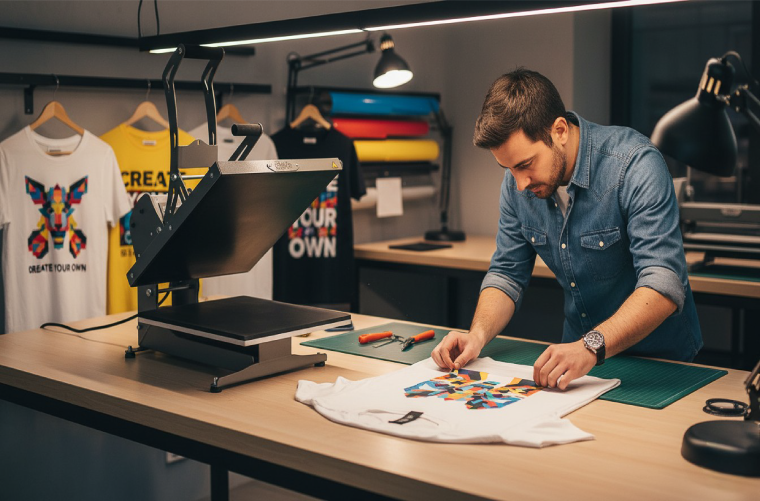
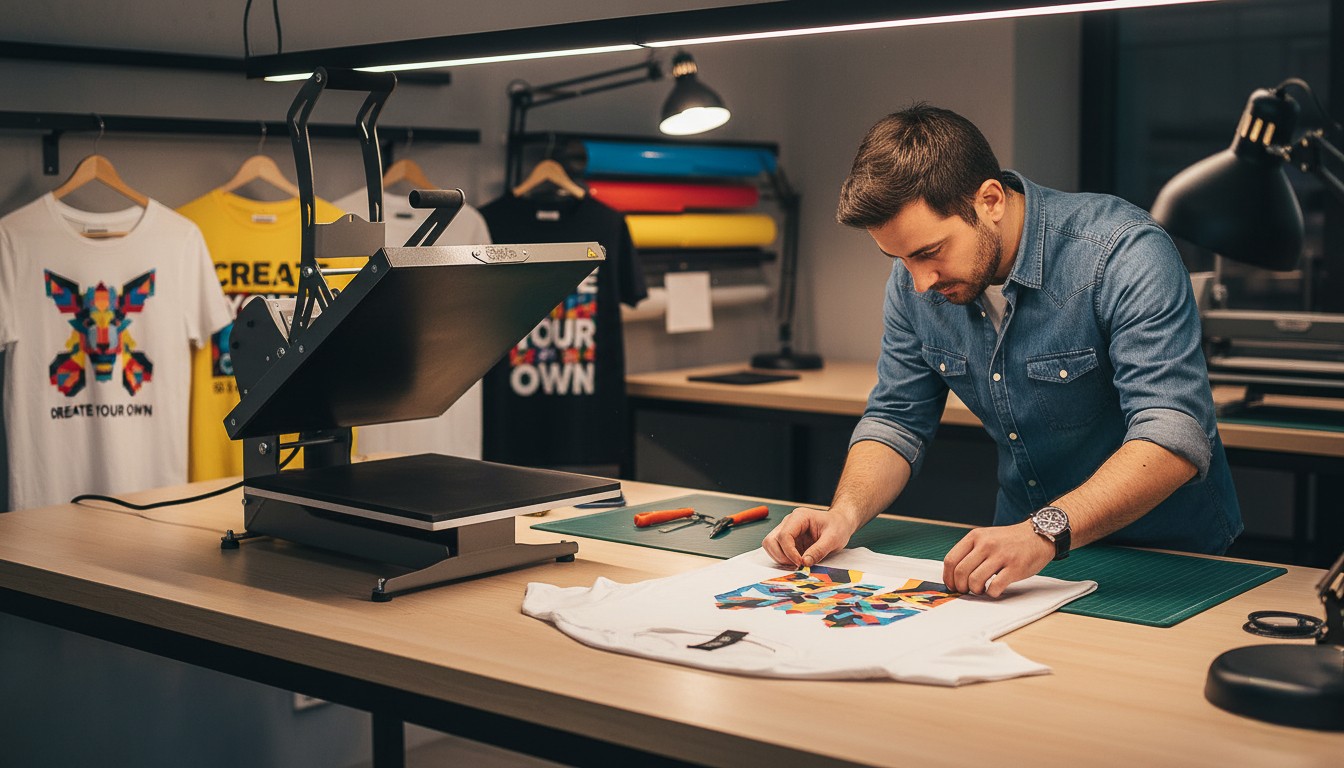
Garment decoration (often referred to in French as flocage textile) covers several printing and embellishment techniques on garments and textile accessories. These methods apply a design, logo, or text using heat, pressure, or stitching. They are used to customize T-shirts, polos, caps, bags, workwear, and promotional apparel.
The different decoration methods vary by their application process, visual finish, compatible textiles, and production cost. They are generally grouped into five main families: heat transfer vinyl (HTV), DTF printing, screen printing, embroidery, and sublimation.
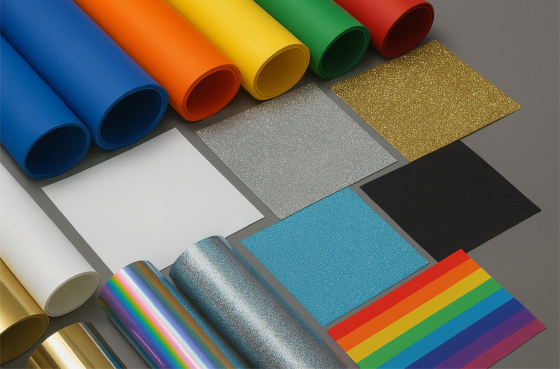
HTV decoration uses a heat-activated vinyl film, known as flex, pre-cut with a cutting plotter. After weeding (removing the excess vinyl to keep only the design or text to be transferred), the design is heat pressed onto the fabric. This technique is commonly used for small personalized runs: names, numbers, texts, vector logos.
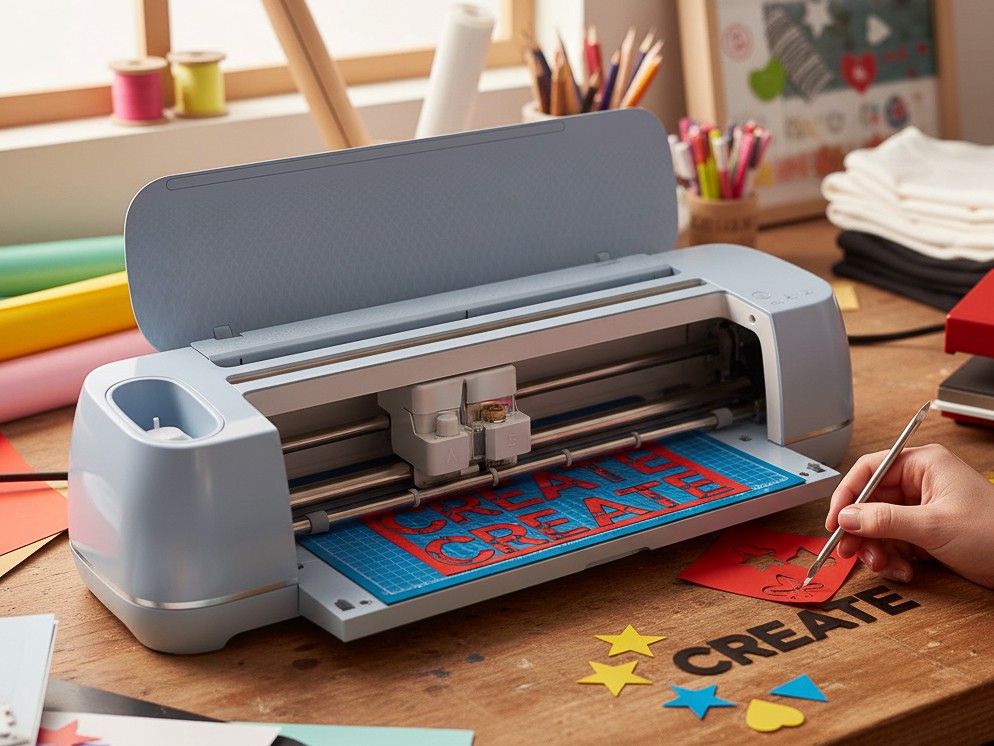
Crisp, smooth, and precise finish.
Excellent wash durability.
Wide range of colours and effects (glitter, metallic, neon).
Suitable for most fabrics (cotton, polyester, poly-cotton).
Affordable unit cost.
Requires pre-cutting; not ideal for complex graphics or gradients.
Less flexible for multi-colour designs.
Learn more about this garment decoration technique in our article All about heat transfer vinyl (HTV).
The DTF process prints a design with ink onto a special film, then applies a hot-melt adhesive powder. After curing, the design is heat transferred to the fabric. Unlike HTV, no cutting is required.
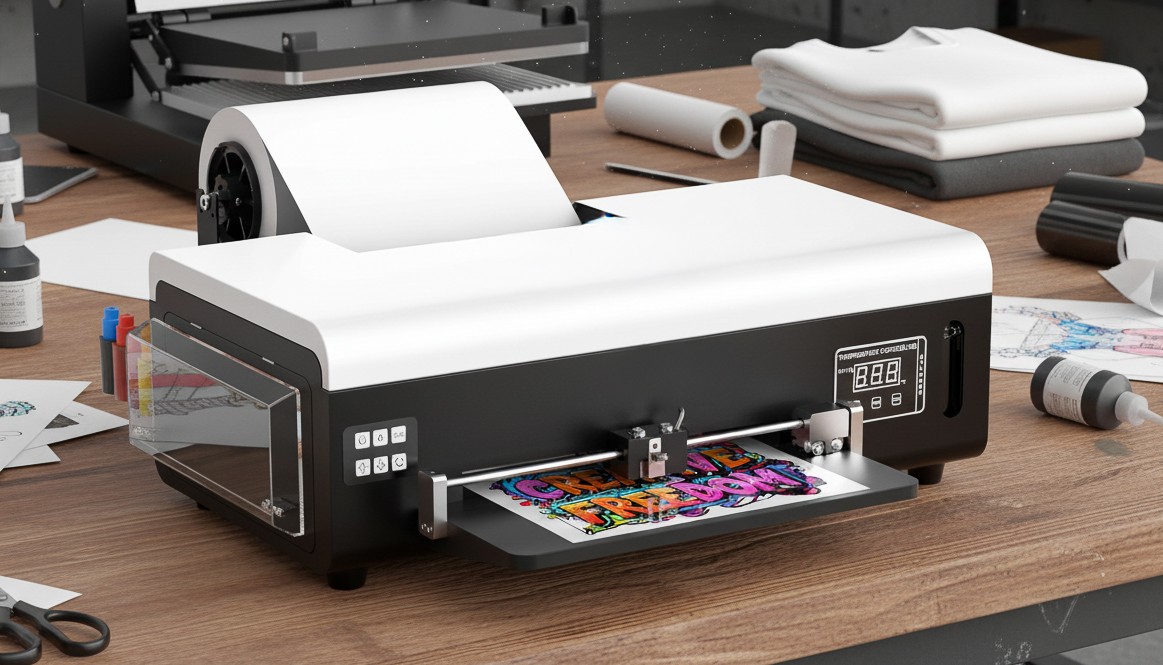
Accurate reproduction of fine details, gradients, and complex colours.
Works on light or dark textiles, cotton or polyester.
Faster for medium runs and on-demand personalization.
Great for print-on-demand workflows.
Higher cost than HTV for very small quantities.
Requires a dedicated DTF printer.
Risk of heavy hand/over-inked feel if poorly prepared (ink, film, powder quality).
Textile screen printing is a direct-to-garment technique. Ink is pushed through a stencil (screen) onto the fabric. Each colour requires its own screen.

Ideal for large quantities (lower unit cost).
Delivers vibrant, opaque colours, even on dark fabrics.
Enables fast production of bulk apparel: promo tees, teamwear, branded polos.
Less cost-effective for small runs.
Not ideal for highly complex artwork or subtle gradients.
Less flexible when designs/colours change frequently.
Businesses often use screen printing for group orders: events, festivals, promotional textiles, or standardized workwear.
Embroidery decorates garments using thread stitched into the fabric to create a logo, name, or motif. It is done with embroidery machines programmed to follow a precise path.
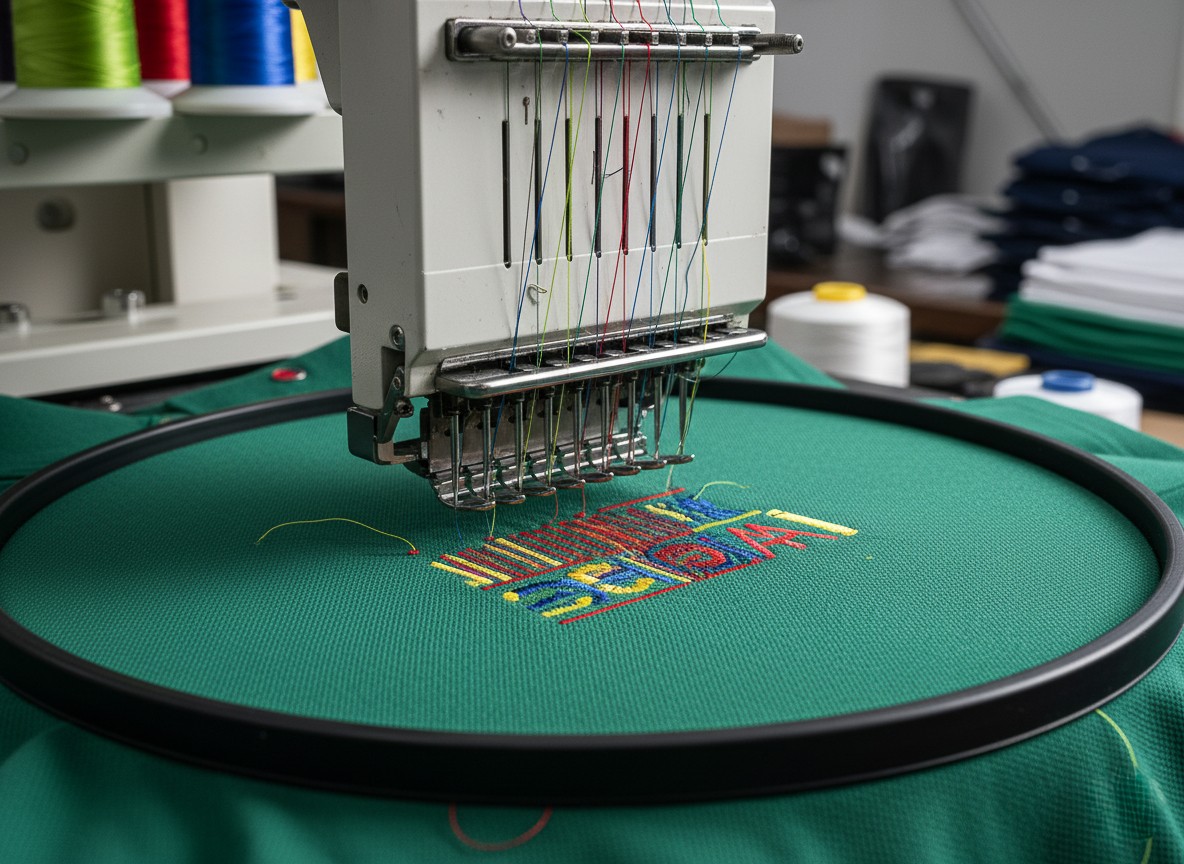
Outstanding durability: won’t fade or crack; withstands frequent washing.
Professional, refined appearance, often perceived as more premium.
Suitable for many items: polos, jackets, shirts, caps, bags.
Higher cost, especially on large areas or complex logos.
Less suitable for very small text or ultra-detailed motifs.
No “photo” or full-colour print effect like DTF or sublimation.
Embroidery is ideal for corporate apparel, business gifts, and high-end personalized products.
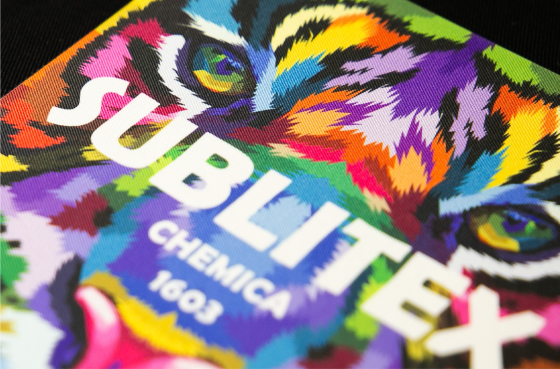
Textile sublimation turns ink into a gas that infuses into the fabric’s fibres under heat. This method requires a white or very light polyester fabric.
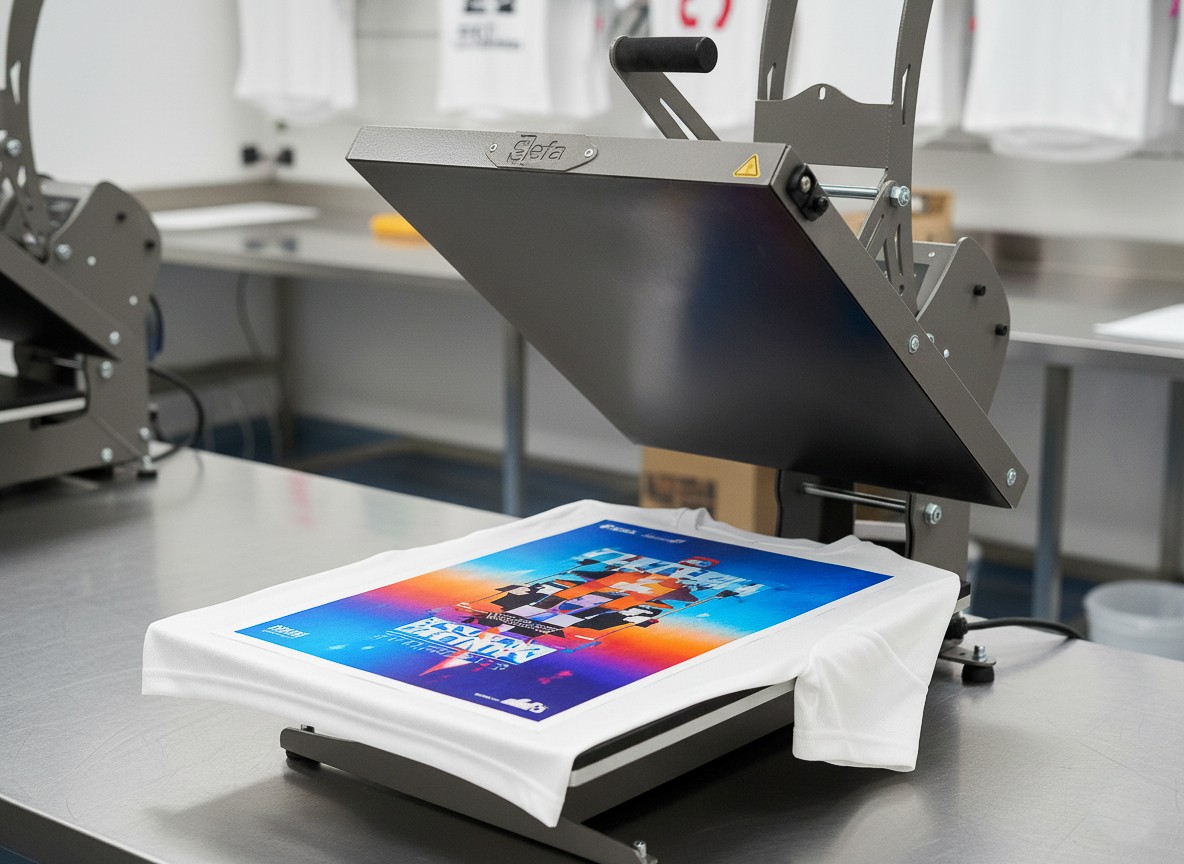
The ink becomes part of the fabric → no raised feel, no glued layer.
Very wash-resistant; does not degrade over time.
Delivers a photo-realistic result, ideal for complex visuals, custom patterns, or CMYK prints.
Works only on polyester substrates that are white or very light.
Not suitable for dark or natural fabrics (like cotton).
Sublimation is often used for sports jerseys, technical textiles, or all-over print T-shirts.
Learn more about this textile printing method with our sublimation guide.
| Technique | Finish | Best quantity | Compatible substrates | Detail / Colour |
|---|---|---|---|---|
| Heat transfer vinyl (HTV) | Smooth, contour-cut | Small to medium runs | All fabrics | Medium |
| DTF printing | Full colour, no cutting | Medium to large runs | Cotton / polyester (including dark) | High |
| Screen printing | Flat, opaque | Large runs | Cotton, polyester, blends | Medium |
| Embroidery | Raised, stitched | Any quantity | All textiles | Low |
| Sublimation | Infused, no relief | Medium runs | White polyester only | High |
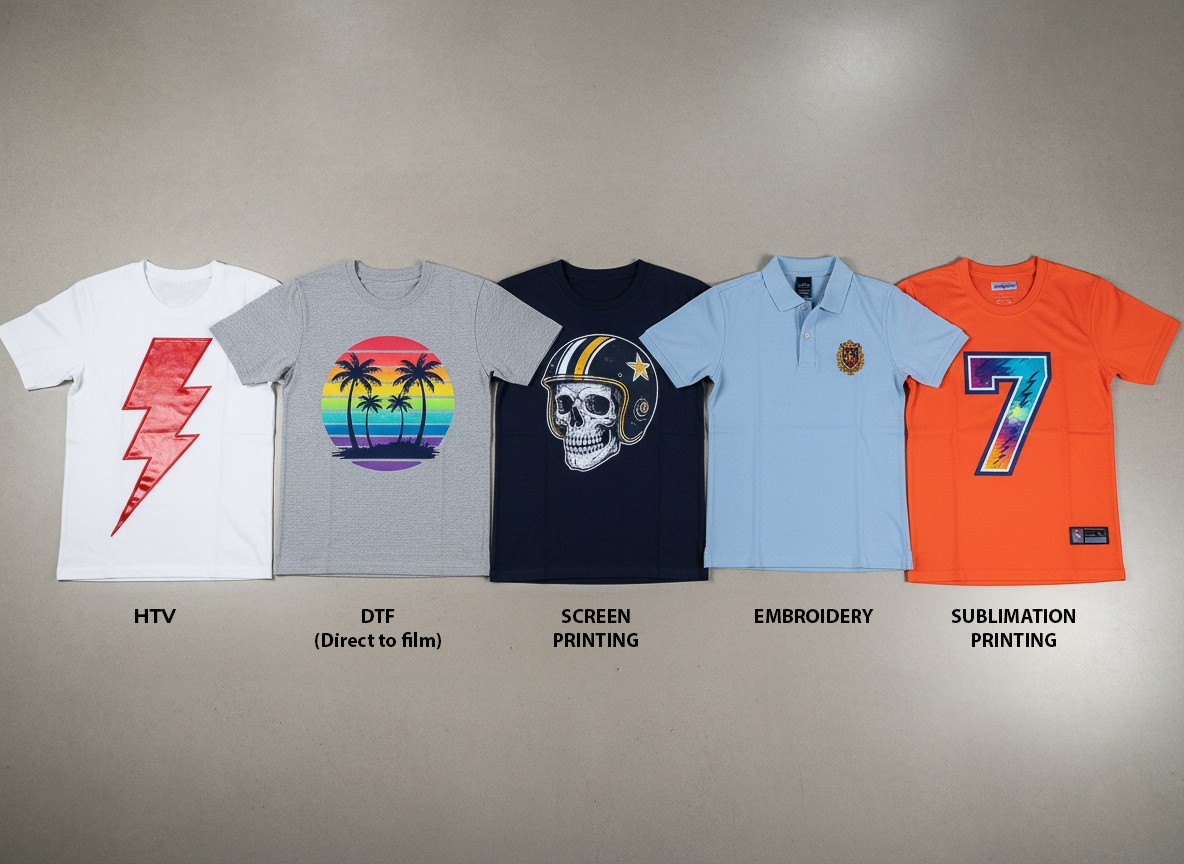
Garment decoration comes in several techniques, each suited to a specific use case, fabric type, desired visual finish, and production volume.
Heat transfer methods (HTV and DTF) are versatile and easy to implement.
Screen printing is cost-effective for large-volume runs.
Embroidery delivers a professional, long-lasting look.
Sublimation provides a print embedded in the fibre with no raised feel.
To choose the best solution, consider your project’s garment type, the logo/design to reproduce, quantity, budget, and desired durability.
100% secure
payment
Fast delivery
from 24 to 72H*
*Depending on the carrier
Free shipping on
orders over €150*
*Metropolitan France
Customer service at
+33 6 47 80 92 20
Certifications
Oeko-Tex and EVE Vegan